
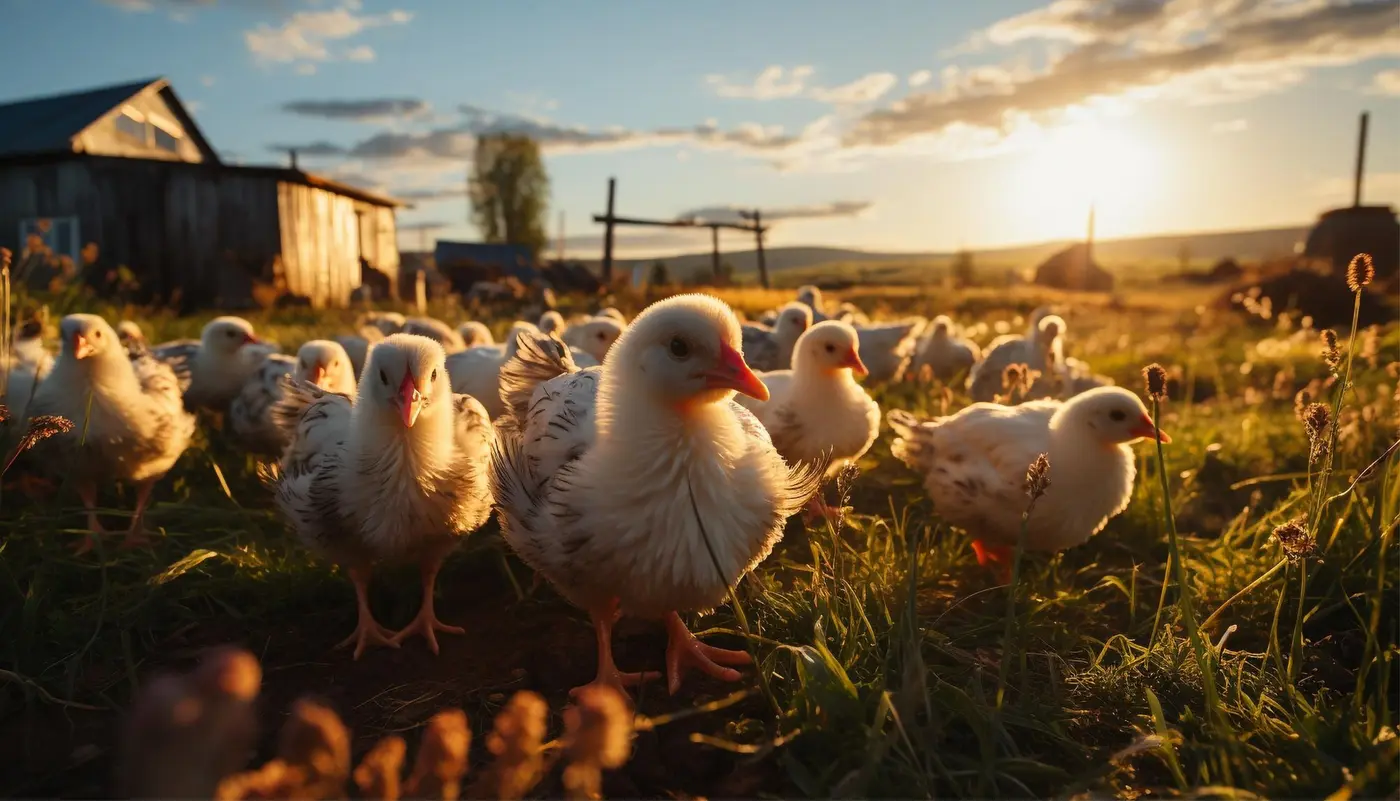
Artificial intelligence that could improve the welfare of farmed chickens by monitoring on their squawks could become available within five years, researchers say.
New research indicates that technology capable of detecting and quantifying distress calls from chickens in large indoor sheds has achieved a 97% accuracy rate in distinguishing these calls from other barn noises. This breakthrough suggests the potential for similar methods to enhance welfare standards for other farmed animals. With approximately 25 billion chickens farmed globally each year, many housed in massive sheds, assessing their welfare through sound analysis emerges as a promising approach.
Chickens are very vocal creatures, and their distress calls are louder and more tonal than other barn noises, making them easy to identify. However, due to the large number of birds in commercial flocks, it’s impractical to deploy human observers to assess their welfare, which can also cause additional stress to the birds.
To overcome this challenge, researchers have developed a deep learning tool that can automatically identify chicken distress calls from recorded data. This tool has been trained on manually classified recordings and can accurately differentiate between different types of sounds, providing a more feasible and objective method for assessing chicken welfare in intensive farming settings.
According to an evaluation published in the Journal of the Royal Society Interface which you can access through the link below, the algorithm correctly identified 97% of distress calls, which is an excellent start for improving animal welfare. It’s important to note that while this technology is exciting, it should complement rather than replace physical inspections and contact with stockkeepers. In addition to vocal distress, it’s essential to consider various welfare indicators, such as physical factors like lameness, to ensure that animals receive optimal care.
The Royal Society for the Prevention of Cruelty to Animals (RSPCA) views this research positively, recognizing its potential for improving animal welfare in intensive farming settings. Ultimately, this breakthrough has the potential to enhance animal welfare for farmed animals and is a promising development for the future of animal welfare.